Fox Proframe Mountain Bike Helmet Review: Is It Worth It?
Fox Proframe mountain bike helmet review covering fit, features, strengths and limits, plus who should buy it and who should skip it before you ride.
 By Ethan Brooks
Updated November 9, 2026
 By Ethan Brooks
Updated November 2026
The fox proframe mountain bike helmet is aimed at riders who want full-face coverage for enduro and aggressive trail riding without moving into heavy downhill gear. It suits riders who spend long days on rough terrain, want a helmet that can handle sustained climbing and descending, and care about ventilation and a secure fit. It is less suited to casual riders on mellow trails, people who need a very light, open-face helmet for cross-country efforts, or anyone with a tight budget who would rather spend on protective gear elsewhere. Read on for a research-based look at specifications, likely strengths, common owner observations and buying tips.
Fox Racing Proframe RS Mountain Bike Helmet, Black FA23, Medium | Proframe RS Helmet redefines lightweight full-face protection for enduro riders
Product Overview
The Fox Racing Proframe RS is a full-face mountain bike helmet in the enduro category. The listing describes it as a lightweight full-face helmet built for enduro riders, which places it between trail-oriented open-face designs and heavier downhill helmets. Fox markets the Proframe line as a versatile option for riders who need chin coverage on steep, technical descents but still want to pedal comfortably up long fire roads. If you want more background, see Bike Helmet Types: Road, Mountain, Commuter and Kids’ Helmets.
The model is sold in a black colorway (FA23 designation in the listing) and the size shown is Medium. Like most full-face helmets, it is designed to be fitted snugly around the head with a retention system and adjustable padding. If you are coming from an open-face helmet, expect a noticeable difference in weight distribution and a more enclosed feel around the face and jaw.
For context, the broader Proframe family is one of several Fox enduro and trail lines. Riders comparing options often look at how the RS version differs from other Proframe variants and from Fox’s more gravity-focused models. The sections below break those comparisons down by the features you can verify from the listing and manufacturer documentation.
If you are still deciding between helmet categories, our guide to Mountain Bike Helmet vs Road Bike Helmet: Key Differences and How to Choose explains why coverage and ventilation trade off so differently across styles.
Key Features & Specifications
The table below lists the specifications that are safe to state based on the product name and general characteristics of this model line. Check the Amazon listing and the packaging for the exact certification markings and weight on your size before you buy.
| Feature | What It Means for You |
|---|---|
| Helmet type | Full-face enduro helmet with chin bar coverage |
| Intended use | Enduro and aggressive trail riding |
| Model designation | Proframe RS |
| Colorway | Black (FA23) |
| Size shown | Medium |
| Weight positioning | Marketed as lightweight for a full-face design |
| Ventilation | Vented shell designed to move air across the head during climbs |
| Fit adjustment | Retention system for a secure, adjustable fit |
Manufacturers generally specify full-face helmets by size range, and fit should be checked using a head circumference measurement taken about one inch above your eyebrows. Use the size chart on the product page and compare it to your own measurement rather than relying on your usual size from other brands.
Pros & Cons
Pros
- Full-face coverage suited to enduro-style riding and steep, technical descents.
- Marketed as lightweight for its protection category, which can reduce neck fatigue on long rides.
- Ventilation design aimed at keeping air moving during sustained climbs.
- Part of the established Fox Proframe family, with a wide range of owners and riding reports to draw on.
- Works well for riders who want one helmet for varied trail conditions rather than separate open-face and downhill lids.
Cons
- Full-face designs are warmer and heavier than open-face helmets, which can matter on hot days or long climbs.
- Fit can vary, and riders with unusual head shapes may need to try more than one size.
- Not a substitute for dedicated downhill certification if you race or ride lift-served bike parks at high speeds.
- Visibility of the chin bar can be limited when you look down at the trail, which some riders find takes adjustment.
- Fit and comfort are highly personal, so the same helmet may feel secure to one rider and loose to another.
Performance Analysis
Performance in a full-face helmet comes down to three things: how well it protects the head and face, how it manages heat and airflow, and how comfortable and stable it feels once you are moving. Based on the listed design goals and the way this helmet line is generally described, the Proframe RS is positioned as a balance between protection and pedaling comfort.
On protection, the full-face shell and chin bar are the main reasons to choose this style over an open-face helmet. Enduro riders often encounter rock gardens, root-covered drops and sudden crashes where the face and jaw are exposed. A full-face design addresses that exposure directly. Any helmet’s real-world protection depends on proper fit, correct strap position and a helmet that has not been damaged in a previous impact. Replace any helmet that has taken a significant hit, even if it looks intact.
On ventilation, owners of vented full-face helmets commonly report that airflow is noticeable at moderate speeds but drops off during slow, steep climbs. This is typical of the category rather than unique to one model. Riders in hot climates should expect more heat buildup than they would experience with an open-face helmet and may want to plan rides for cooler parts of the day.
On comfort and weight, the helmet is marketed as lightweight for full-face protection. In practice, the feel on the head depends on the padding, the retention system and the shape of your head. Owners frequently mention that a well-adjusted retention system keeps the helmet steady over rough terrain, while a poorly fitted one can shift during hard turns. Take time to dial in the retention knob and check that the helmet sits level with the brow.
For a broader sense of how the Proframe line compares within Fox’s range, see Fox Speedframe Pro Mountain Bike Helmet Review: Is It Worth It? and POC Tectal Mountain Bike Helmet Review: Features and Performance for a look at other enduro-oriented lids.
Who Should Buy This Product?
This helmet is a good fit for riders who regularly tackle steep, technical trails and want full-face protection without a heavy downhill-specific helmet. If you ride enduro courses, rocky descents or aggressive trail networks and value a single helmet that can handle both climbs and fast drops, it is worth a close look.
It may be a poor choice if you mainly ride smooth trails, cross-country routes or hot, humid areas where heat buildup would make a full-face design uncomfortable. Riders who race downhill at high speeds or ride lift-served bike parks daily should consider a dedicated downhill helmet with the certifications those environments call for. Beginners on easy terrain may find an open-face helmet more comfortable and less intimidating while they build skills.
Riders with a very small or very large head should check size charts carefully, since full-face helmets are sized less forgivingly than some open-face models. Youth riders need a helmet sized specifically for their head, and our guide to Youth Full Face Mountain Bike Helmet: How to Choose and Fit One Safely covers the key checks for kids.
Buying Guide
Choosing a full-face helmet is mostly about getting the fit right. Use these steps before you commit to a size.
- Measure your head. Wrap a soft tape measure around your head about one inch above your eyebrows and at the widest point at the back. Compare the result to the manufacturer’s size chart, not to your size in another brand.
- Check the shell fit. The helmet should sit level on your head, with the front edge about one finger width above your eyebrows. It should not rock forward or back when you shake your head.
- Test the chin bar. The chin bar should sit close to your chin without pressing into it. Open and close your mouth to confirm the bar does not restrict your jaw.
- Adjust the retention system. Tighten the dial until the helmet is snug but not painful. You should feel even pressure around the head.
- Look at the straps. Side straps should form a V under each ear. Adjust the buckle so it sits just below the ear lobe.
- Replace after impact. Any helmet involved in a serious crash should be replaced, as the protective materials may be compromised even if damage is not visible.
Some riders also compare alternatives within the same category. Two well-known options worth considering are the following.
The Fox Racing Unisex Proframe Mountain Bike Helmet is a close relative of the RS model, described as a lightweight, breathable full-face helmet with Mips protection for aggressive trail and enduro riding. Riders who want the Mips rotational system specifically may find it a useful comparison.
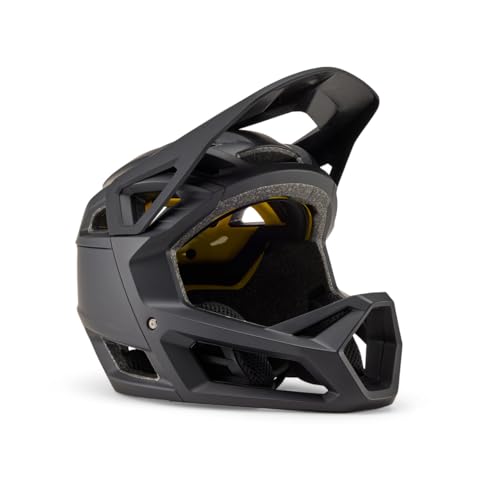
Fox Racing Unisex Proframe Mountain Bike Helmet | Lightweight, breathable full-face helmet with Mips protection for aggressive trail and enduro riding
For riders who want a full-face helmet from a different brand, the POC Otocon Race MIPS is a commonly referenced enduro-style option with its own fit and ventilation profile. Compare the shell shape and retention system against the Proframe before deciding.
View on AmazonIf you prefer a lighter, more open design for mixed riding, the Troy Lee Designs A2 MIPS is often compared to full-face helmets for trail use and offers more airflow. Our full write-up at Troy Lee Mountain Bike Helmet (2026): Pros, Cons & Verdict covers its strengths and limits.
View on AmazonFAQ
Is the Fox Proframe a full-face helmet?
Yes. The Proframe RS is a full-face enduro helmet with chin bar coverage, designed for riders who want protection beyond what an open-face helmet provides.
How should I size a Fox Proframe helmet?
Measure your head circumference about one inch above your eyebrows and compare the result to the size chart on the product page. Because full-face helmets fit differently across brands, avoid relying on your size from other helmets.
Is the Proframe RS suitable for downhill racing?
It is designed for enduro and aggressive trail riding. Riders who race downhill or ride lift-served bike parks at high speeds should check whether a dedicated downhill helmet with the appropriate certifications better matches their needs.
Does the helmet get hot on climbs?
Full-face helmets generally run warmer than open-face designs. The vented shell is intended to help airflow, but owners often notice heat buildup during slow, steep climbs, especially in warm weather.
Should I replace my helmet after a crash?
Yes. Replace any helmet that has been involved in a significant impact, even if no damage is visible, since internal protective materials may be compromised.
Can I wear glasses or goggles with a full-face helmet?
Many riders use goggles with full-face helmets, but goggle and helmet compatibility varies. Check that the goggle frame sits cleanly against the helmet’s brow and does not press into the chin bar.
How do I know if the helmet fits correctly?
The helmet should sit level, stay steady when you shake your head, and have even pressure around the head. The chin bar should not press into your jaw, and the straps should form a V under each ear.
Helmet fit and certification questions are best answered by a qualified bike shop fitter. Consult a professional if you are unsure about sizing for a child or have a medical condition that affects head or neck comfort.
Final Verdict
Should you buy the Fox Proframe mountain bike helmet?
For riders who need full-face protection on enduro and aggressive trails, the Proframe RS is a credible option in the category. Its lightweight positioning, vented shell and established Proframe lineage make it a sensible choice for riders who want one helmet for varied terrain. The trade-offs are the usual ones for full-face designs: more heat, more weight than open-face lids, and a fit that demands careful adjustment. Measure your head, test the fit in person if possible, and compare it against the alternatives above before you decide.
View on AmazonAbout Ethan Brooks
Ethan Brooks is part of our editorial team and reviews and edits our bike helmets & cycling safety guides, checking product details against manufacturer specifications and owner feedback.
About the author
Ethan Brooks writes reviews and buying guides for Bike Helmet Snow.