Hat for Bike Helmet: 5 Best Liners and Caps for Winter Riding
Looking for the right hat for bike helmet use? Compare five helmet liners and cycling caps for cold weather, with fit tips, key features and who each suits.
 By bikehelmetsnow editorial team
Updated November 7, 2026

As an Amazon Associate I earn from qualifying purchases. This page may contain affiliate links.
Choosing a hat for bike helmet use is mostly about keeping your head warm without compromising the fit or protection of your helmet. A thin layer under a helmet can keep wind off your ears, stop cold air from chilling your scalp on a descent, and help sweat go somewhere useful instead of running into your eyes. The catch is that a liner that is too thick, too stiff or too loose can push your helmet out of position or leave gaps at the temples, which defeats the purpose. This guide looks at five well-known skull cap and helmet liner options and explains how to judge each one against a practical set of selection criteria: fabric and warmth, wind protection, fit under a helmet, eyewear compatibility and ear coverage.
Our Top Picks
Quick Comparison
| Product | Best for | Key feature |
|---|---|---|
| Hikenture Skull Cap Helmet Liner with Glasses Holes | Cold, windy winter rides | Thermal fleece with a wind-resistant surface and ear flaps |
| Tough Headwear Thermal Skull Cap Helmet Liner | Running and cycling in mixed conditions | Moisture-wicking beanie with ear flaps |
| MELASA Winter Helmet Liner Skull Cap | Riders who wear glasses | Fleece lining with glasses holes |
| ROCKBROS Skull Cap Helmet Liner | Everyday commuters | Thermal cycling cap with glasses holes |
| LIODFGLER Bucket Hat with Bike Helmet Cycling Helmet | Warm-weather riders wanting sun cover | Breathable bucket-style hat for sun protection |
Hikenture Skull Cap Helmet Liner with Glasses Holes, Thermal Fleece, Grey
Hikenture Skull Cap Helmet Liner with Glasses Holes, Thermal Fleece, Grey | Ear Flaps and Wind-Resistant Surface for Cold Weather, Stretch Fit for Men & Women, Winter Cycling Hat
This liner suits riders who face cold, windy conditions and want coverage over the ears without a bulky hat. It is designed to sit neatly under a standard road or commuter helmet.
Key specs
- Thermal fleece construction
- Wind-resistant outer surface
- Ear flaps for added coverage
- Stretch fit for men and women
- Glasses holes for eyewear compatibility
Pros
- The wind-resistant surface helps block chill on fast descents.
- Ear flaps cover the area most exposed to cold air.
- Glasses holes keep eyewear from pinching the liner.
Cons
- Thicker fleece may feel warm in mild weather.
- Ear flaps can be bulky under tighter helmet straps, so check fit before a long ride.
Tough Headwear Thermal Skull Cap Helmet Liner – Winter Running Beanie, Black

Tough Headwear Thermal Skull Cap Helmet Liner – Winter Running Beanie | Moisture-Wicking Beanie with Ear Flaps for Men & Women, Running Hat & Lightweight Cycling Cap, Cold Weather Gear – Black
This option is aimed at riders who move between running and cycling and want a lightweight layer that manages sweat well. It fits riders who prefer a cap-style liner over a heavier beanie.
Key specs
- Moisture-wicking thermal fabric
- Ear flaps included
- Lightweight construction
- Unisex fit for men and women
- Black colorway
Pros
- Moisture-wicking fabric helps keep sweat off the scalp during climbs.
- Its low profile sits comfortably under most helmets.
- Works well across both running and cycling.
Cons
- Offers less wind protection than fully windproof liners.
- Owners often report that sizing runs snug, so measure your head before ordering.
MELASA Winter Helmet Liner Skull Cap for Men Women, Blue

MELASA Winter Helmet Liner Skull Cap for Men Women, Fleece Lined Warm Cycling Cap with Glasses Holes, Thermal Hat Beanie for Running Cycling Motorcycle(Blue)
This liner is a good match for riders who wear glasses on every ride and want a warm layer that does not press them out of place. It is also suited to motorcycle and running use, which makes it versatile.
Key specs
- Fleece-lined construction
- Glasses holes
- Unisex fit for men and women
- Blue colorway
Pros
- Glasses holes help eyewear sit correctly under the helmet.
- Fleece lining adds warmth without much bulk.
- Versatile enough for cycling, running and motorcycle use.
Cons
- Fleece alone may not block strong wind as well as a windproof shell.
- Fit is generally stretchy, but very large heads may find it snug.
ROCKBROS Skull Cap Helmet Liner Thermal Cycling Caps, Black

ROCKBROS Skull Cap Helmet Liner Thermal Cycling Caps Winter Hats for Men Women Running Beanies with Glasses Holes Black
This cap suits commuters who ride in cool but not severely cold weather and want a simple, consistent layer that works with a helmet every day. It is a practical everyday option rather than an extreme-cold specialist.
Key specs
- Thermal cycling cap construction
- Glasses holes
- Stretch fit for men and women
- Black colorway
Pros
- Glasses holes keep eyewear comfortable under the helmet.
- Low-profile shape fits most commuter helmets well.
- Simple black design pairs with most cycling kits.
Cons
- Does not include ear flaps, so ear coverage is limited.
- May be less warm than heavier fleece liners in deep winter.
LIODFGLER Bucket Hats with Bike Helmet Cycling Helmet, Black
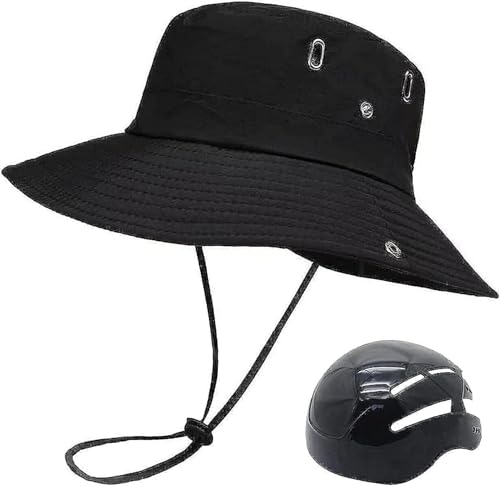
LIODFGLER Bucket Hats with Bike Helmet Cycling Helmet for Unisex Adults Fashion Breathable Sunscreen Head Protection Bicycle Helmet Hats (Black)
This is a different category from the winter liners above. It suits riders who want sun protection and a breathable layer in warmer months, especially on open roads or trails where glare is an issue.
Key specs
- Bucket-style hat design
- Breathable construction
- Sun protection for the face and neck
- Unisex adult fit
- Black colorway
Pros
- Brim provides shade for the eyes and face during long summer rides.
- Breathable fabric suits warm conditions better than fleece.
- Unisex sizing works for a wide range of riders.
Cons
- A bucket hat’s brim can interfere with helmet fit and visor position, so test it with your helmet.
- Provides no real warmth, so it is not suitable for cold weather.
Buying Guide
Selection criteria
Every hat for bike helmet use should be judged on four things: whether it fits under your helmet without changing its position, how well it handles warmth and moisture, how much wind it blocks, and whether it works with your eyewear. A liner that looks good on paper can still feel wrong once a helmet is strapped down, so fit always comes first.
Important features
- Thin, flat seams. Thick seams can press into the scalp under a helmet.
- Stretch fabric. A little stretch lets the liner sit smoothly without creating pressure points.
- Glasses holes. Cutouts at the ear area keep sunglasses or prescription frames from bunching the fabric.
- Ear coverage. Flaps help in cold wind, but they add bulk, so check strap clearance.
- Moisture management. Wicking fabrics keep sweat away from the scalp on climbs.
Specs to check
Look at the fabric type (fleece, thermal knit or synthetic blend), whether the liner is windproof, the size range, and whether the product lists ear flaps or glasses holes. Manufacturers usually state these clearly, so compare them directly rather than relying on general impressions.
Choosing by need
- Cold and windy rides: choose a fleece liner with a wind-resistant surface and ear flaps.
- Mixed cool conditions: a moisture-wicking thermal cap is usually the most flexible choice.
- Glasses wearers: prioritize glasses holes above everything else.
- Hot weather: skip liners entirely and consider a breathable bucket-style hat for sun cover, checking brim clearance first.
Things to watch out for
- Never let a liner push your helmet up or sideways. The helmet must sit level and snug, with the front edge about two finger-widths above the eyebrows.
- Do not layer anything that changes the helmet’s fit. If a liner forces you to loosen the straps significantly, it is the wrong size or thickness.
- Avoid cotton in cold weather, since it holds moisture and loses warmth when damp.
- Helmets are certified as a complete system. Accessories like caps and liners are not part of that certification, so choose them to complement the helmet rather than to replace any protective feature.
FAQ
Can I wear a skull cap under a bike helmet?
Yes, a thin skull cap or helmet liner is commonly worn under a bike helmet. The key is that it stays thin enough not to change how the helmet fits. After putting the liner on, fasten the helmet and check that it sits level and does not shift when you shake your head.
Will a liner make my helmet fit too tight?
It can. A thick fleece liner may make a helmet feel snug, especially if you have sized the helmet with a bare head. If you plan to wear a liner regularly, check fit with the liner on and consider adjusting the retention system accordingly.
Do bike helmet liners need to be windproof?
Not always. Windproof liners are better for cold, fast rides where wind chill is significant. For cool but calm conditions, a breathable thermal cap is usually enough. Riders who descend at speed in winter tend to notice wind protection more.
Is a bucket hat safe to wear with a bike helmet?
A bucket hat is generally used for sun protection rather than warmth. Its brim can interfere with helmet fit and visor position, so test it before a ride. Never wear anything that prevents the helmet from sitting properly on your head.
Do glasses holes matter in a helmet liner?
They matter a lot if you wear sunglasses or prescription eyewear while riding. Without cutouts, the fabric can bunch around the arms of your glasses, causing discomfort or pressure. Glasses holes keep the fit clean and comfortable.
How do I size a helmet liner?
Most liners are stretch-fit, but measure your head circumference just above the eyebrows and compare it with the manufacturer’s size chart. If you are between sizes, choose the one that feels snug but not compressive. For guidance on fitting the helmet itself, consult a qualified bike fitter or a retailer with fitting experience.
Can a liner replace a winter cycling cap?
For many riders, yes, provided it offers enough warmth and wind protection for their climate. In very cold conditions, you may need a combination of a liner and a separate neck or face covering. If you are unsure which combination suits your region, a local cycling shop can advise based on your typical riding conditions.
Conclusion
A good hat for bike helmet use should disappear under your helmet and keep you comfortable without changing how the helmet fits. For cold, windy rides, the Hikenture liner with its wind-resistant fleece and ear flaps is a strong fit for the job. Riders who want a lighter, sweat-managing layer across running and cycling may prefer the Tough Headwear thermal cap. Glasses wearers should look closely at the MELASA and ROCKBROS options, since both include glasses holes. For warm weather and sun cover, the LIODFGLER bucket hat is a different category entirely, and it should be checked carefully against your helmet’s visor and fit. Whichever you choose, confirm that your helmet still sits level and snug before heading out. If you have fit concerns, a qualified bike fitter can help.
Related reading
- Youth Full Face Mountain Bike Helmet: How to Choose and Fit One Safely
- Road Bike Helmet Men: 10 Best Picks for Every Rider (2026)
- Road Bike Cycling Helmet Review (2026): Fit, Features and Who It Suits
- Reflective vs Removable Stickers for Bike Helmets: Which Should You Choose?
About the author

bikehelmetsnow editorial team writes reviews and buying guides for Bike Helmet Snow.