Downhill Mountain Bike Helmet: 5 Best Picks for Gravity Riding (2026)
Compare 5 downhill mountain bike helmet options for gravity riding, with fit tips, safety standards and what to check before you buy.

 By Audrey Brooks
Updated November 2026
A downhill mountain bike helmet needs to do more than look the part. Gravity riders face high speeds, steep drops, rock gardens and the occasional face-first slide, so the right helmet should offer full-face or near-full-face coverage, a solid safety certification and a fit that stays put when you hit a jump. This guide compares five options on coverage, certification, fit adjustment and the kind of riding each one suits. The picks are based on manufacturer specifications, brand reputation and common owner feedback patterns, not on any testing we carried out ourselves.
Our top picks at a glance
- 1TOP CHOICEBest overallFox Racing Unisex-Adult V Core MIPS Motocross Dirt Bike Helmet, Matte WhiteView on Amazon
- 2
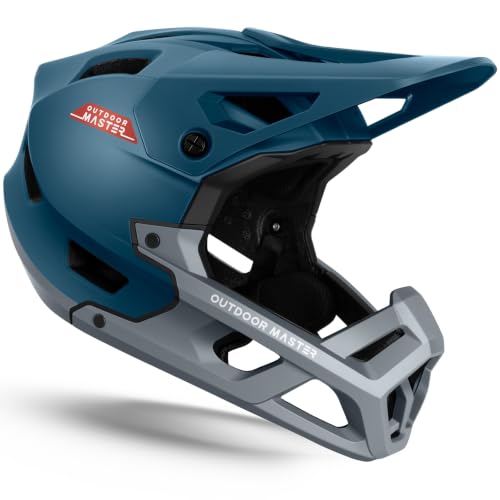 TOP CHOICEBest for full-face protection on a budgetOutdoorMaster Full Face Mountain Bike Helmet for Men & Women – Grizzly (Azure Blue, Large)View on Amazon
- 3
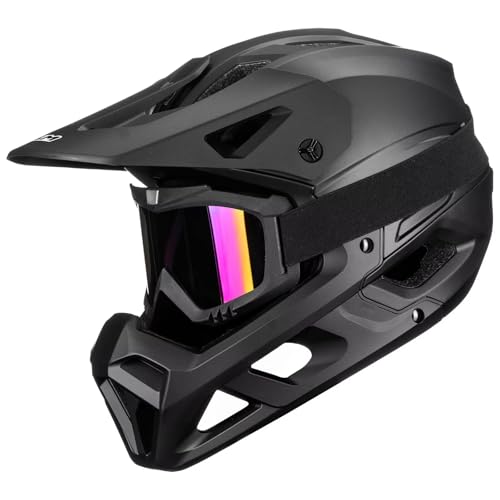 TOP CHOICEBest for dial fit and goggle useILM Mountain Bike MTB Full Face Helmet Adults Adjustable Size Dial HT58View on Amazon
- 4
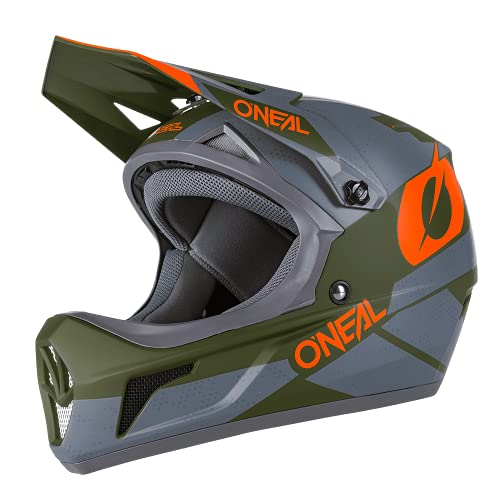 Best for trail-to-park crossoverO'Neal Sonus Deft Mountain Bike Helmet (Olive/Orange, Large)View on Amazon
- 5
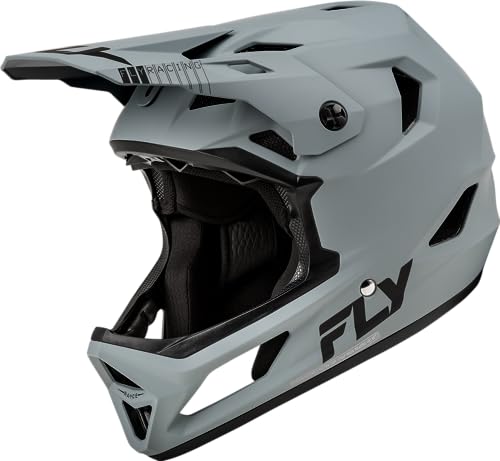 Best for riders wanting a lighter open-face optionFly Racing Rayce MTB/BMX Bicycle Helmet (Matte Grey, Large)View on Amazon
Our Top Picks
Quick Comparison
| Product | Best for | Key feature |
|---|---|---|
| Fox Racing Unisex-Adult V Core MIPS Motocross Dirt Bike Helmet, Matte White | Overall gravity riding | MIPS rotational protection layer |
| OutdoorMaster Full Face Mountain Bike Helmet Grizzly (Azure Blue, Large) | Full-face protection on a budget | Two removable chin pads |
| ILM Mountain Bike MTB Full Face Helmet HT58 | Dial fit and goggle use | Size dial adjustment and goggle-ready design |
| O’Neal Sonus Deft Mountain Bike Helmet (Olive/Orange, Large) | Trail-to-park crossover | Lightweight build for longer days |
| Fly Racing Rayce MTB/BMX Bicycle Helmet (Matte Grey, Large) | Riders wanting a lighter open-face option | Open-face coverage with a casual profile |
Fox Racing Unisex-Adult V Core MIPS Motocross Dirt Bike Helmet, Matte White
Fox Racing Unisex-Adult V Core MIPS Motocross Dirt Bike Helmet, Matte White
Best for: Overall gravity riding
This is a good fit for riders who want a full-face helmet from an established motocross and mountain bike brand, with MIPS included as standard. It suits enduro and downhill riders who spend most of their time on steep, technical terrain and want a helmet that works well with goggles.
Key specs
- MIPS (Multi-directional Impact Protection System) liner for rotational impact reduction
- Full-face design with a fixed chin bar
- Matte white finish
Pros
- MIPS adds a rotational-impact layer that many gravity riders look for
- Well-known brand with a broad range of replacement parts
- Coverage suits high-speed descents and jump landings
Cons
- Full-face helmets run warm on climbs and in summer heat
- Fit can take some adjustment to get the chin bar sitting correctly
Bottom line: A strong choice for riders who want a proven full-face option with MIPS and are willing to spend time dialing in the fit.
View on AmazonOutdoorMaster Full Face Mountain Bike Helmet for Men & Women – Grizzly (Azure Blue, Large)
OutdoorMaster Full Face Mountain Bike Helmet for Men & Women-Two Removable Chin Pad Mountain Bike Helmet Grizzly, Ventilation Lightweight Racing Downhill DH BMX MTB Helmet (Azure Blue, Large)
Best for: Full-face protection on a budget
This helmet suits newer downhillers and riders who want full-face coverage without a premium price tag. It is also a practical option for riders who want to experiment with downhill before committing to a higher-end lid.
Key specs
- Full-face design with a removable chin guard
- Two removable chin pads for fit adjustment
- Ventilation openings for lighter airflow
Pros
- Removable chin pads make it easier to fine-tune fit
- Good full-face coverage for the category
- Budget-friendly entry point to downhill protection
Cons
- Brand has less track record in competitive downhill than established names
- Ventilation is modest for long, hot days
Bottom line: Best for riders who need full-face protection now and want to keep spending modest. Check the fit carefully before the first ride.
View on AmazonILM Mountain Bike MTB Full Face Helmet Adults Adjustable Size Dial HT58
ILM Mountain Bike MTB Full Face Helmet Adults Adjustable Size Dial BMX HT58 | CPSC ASTM Certified, Upgraded Impact-absorbing GEPS Foam, EPP Chin Guard, with Wind Goggles, for Off Road Ebike Dirt Bike
Best for: Dial fit and goggle use
This is aimed at riders who want a precise, repeatable fit and plan to ride with goggles. The listing describes CPSC and ASTM certification, which is the standard you should look for on any helmet sold in the US.
Key specs
- Adjustable size dial at the rear for fine fit control
- EPP chin guard
- Listed as CPSC and ASTM certified
Pros
- Size dial makes it easier to get a snug, even fit
- Designed with goggle compatibility in mind
- Listing states CPSC and ASTM certification
Cons
- Less brand recognition in the downhill community than some competitors
- Owners sometimes report that the dial mechanism needs a careful first adjustment
Bottom line: A good pick for riders who value a dial-based fit system and want a full-face helmet that works with goggles.
View on AmazonO’Neal Sonus Deft Mountain Bike Helmet (Olive/Orange, Large)
O'Neal Sonus Deft Mountain Bike Helmet Olive/Orange, Large
Best for: Trail-to-park crossover
This helmet suits riders who split their time between trail rides and bike park days. O’Neal is a well-established name in motocross and mountain biking, and the Sonus line is aimed at riders who want protection without the bulk of a full-face lid.
Key specs
- Lightweight shell designed for longer days in the saddle
- Olive/orange colorway
- Established brand with a long mountain bike history
Pros
- Lighter feel than many full-face options
- Good ventilation for pedaling between runs
- Recognized brand with consistent quality reputation
Cons
- Coverage is less extensive than a true full-face helmet, so it may not suit steep, high-speed downhill
- Owners sometimes mention the fit needs a few tries to dial in
Bottom line: A sensible middle ground for riders who want more than trail coverage but do not need a full-face lid for every ride.
View on AmazonFly Racing Rayce MTB/BMX Bicycle Helmet (Matte Grey, Large)
Fly Racing Rayce MTB/BMX Bicycle Helmet (Matte Grey, Large)
Best for: Riders wanting a lighter open-face option
This is the least protective option in this list. It suits riders who mostly ride flow trails and occasional bike park laps, or who are moving from a trail helmet toward gravity riding and want a step up in coverage.
Key specs
- Open-face design for airflow and visibility
- Matte grey finish
- Designed for MTB and BMX use
Pros
- Lighter and cooler than full-face options
- Casual profile suits trail riding and commuting
- Easy to wear for long days in the saddle
Cons
- Does not offer full-face chin protection, which matters on steep descents
- Not the right choice for sustained downhill or jump lines
Bottom line: Pick this if your riding leans toward trails rather than gravity runs. For true downhill, a full-face helmet is the safer choice.
View on AmazonBuying Guide
Full-face coverage versus open-face
Most downhill riding calls for full-face coverage, which protects the jaw, chin and face in a crash. Open-face helmets give better airflow and a lighter feel but leave the lower face exposed. If you regularly ride steep, rocky or high-speed terrain, a full-face design is the usual recommendation.
Good picks for this: Fox Racing V Core MIPS, OutdoorMaster Grizzly
Safety certification
Check that the helmet lists a recognized standard. In the US, look for CPSC compliance, and for bike helmets, ASTM F1952 is a common downhill-oriented standard. Certification on the listing and in the packaging is what you should confirm before buying.
Good picks for this: ILM HT58, Fox Racing V Core MIPS
Rotational impact protection (MIPS)
MIPS is a liner system designed to reduce rotational forces during angled impacts. Many downhill riders prefer helmets with MIPS because angled crashes are common on steep terrain. Check whether the feature is included and whether the manufacturer specifies it for the exact model.
Good picks for this: Fox Racing V Core MIPS
Fit and adjustment
A downhill helmet should feel snug on all sides without pressure points. Measure your head circumference just above the eyebrows and compare it to the manufacturer’s size chart. Look for a dial or ratchet system if you want fine adjustment, and check that the chin bar does not press into your jaw when you open your mouth. A properly fitted helmet should move with your head when you shake it.
Good picks for this: ILM HT58, OutdoorMaster Grizzly
Goggle compatibility
If you ride with goggles, check that the helmet’s eyeport and chin bar leave room for them without pushing the goggle frame into your face. Some full-face helmets are designed with goggle use in mind, and the fit can change noticeably once goggles are on.
Good picks for this: ILM HT58, Fox Racing V Core MIPS
Ventilation and weight
Full-face helmets are heavier and run warmer than open-face options. If you ride long climbs before your descents, ventilation becomes more important. Lighter helmets reduce neck fatigue on long days, but a lighter shell should never come at the cost of certified protection.
Good picks for this: O’Neal Sonus Deft, Fly Racing Rayce
Durability and replacement
Helmets are designed to absorb impact once and then need replacement. Replace any helmet after a significant crash, even if the damage is not visible, and check the manufacturer’s guidance on the service life of the shell and liner. Store the helmet away from direct sunlight and heat, which can weaken materials over time.
Good picks for this: O’Neal Sonus Deft, OutdoorMaster Grizzly
FAQ
Do I need a full-face helmet for downhill mountain biking?
Most downhill riders use a full-face helmet because it protects the jaw and face, which are common impact points in steep crashes. Open-face trail helmets are less protective in this context. If your riding stays on mellow trails, an open-face helmet may be enough, but gravity riding calls for more coverage.
How should a downhill mountain bike helmet fit?
It should feel snug on all sides, sit level on the head and cover the forehead without sitting too low over the eyebrows. The chin bar should not press into your jaw. Shake your head gently to check that the helmet stays in place. Consult a professional fitter or a local bike shop if you are unsure.
What safety standards should I look for?
In the US, look for CPSC compliance on bike helmets and ASTM F1952 for downhill-oriented designs. Check the product listing and packaging for the certification statement before you buy.
Is MIPS worth it in a downhill helmet?
MIPS is designed to reduce rotational forces in angled impacts, which are common in downhill crashes. Many riders consider it a worthwhile feature, but it does not replace a certified helmet or good riding habits.
How often should I replace my downhill helmet?
Replace it after any significant impact, even if no damage is visible, and follow the manufacturer’s guidance on service life. Consider replacing it if the foam or straps show wear, or if the helmet has been exposed to heat or chemicals for long periods.
Can I use a road bike helmet for downhill?
Road helmets are designed for different impacts and usually offer less coverage than full-face downhill helmets. They are not generally recommended for gravity riding. Use a helmet designed for downhill or enduro riding on steep terrain.
Should I buy a kids’ downhill helmet or an adult one?
Kids need helmets sized for their heads, with the same certification and fit checks as adults. Look for youth-specific full-face designs and measure carefully. The Youth Full Face Mountain Bike Helmet guide on this site covers fit in more detail.
Conclusion
For most gravity riders, a full-face helmet with a recognized certification and a secure fit is the priority. The Fox Racing V Core MIPS is a strong overall choice for riders who want MIPS and an established brand. The OutdoorMaster Grizzly and ILM HT58 offer full-face coverage at more modest levels, with the ILM standing out for its dial fit. The O’Neal Sonus Deft suits riders who split time between trails and parks, and the Fly Racing Rayce is best for those whose riding stays on flowing trails rather than steep runs. Whatever you choose, fit it carefully and replace it after any serious crash. For more options, see Full Face Downhill Mountain Bike Helmet: 6 Best for Gravity Riding (2026) and 9 Best Bike Helmet Full Face Options for Downhill and Enduro (2026).
Sources
- Federal bike helmet safety requirements and consumer guidance (cpsc.gov)
- Standards information, including the F1952 downhill mountain bike helmet specification
- General guidance on helmet use and crash protection (nhtsa.gov)
Related reading
- 6 Best Mountain Bike Helmet Full Face Options for Enduro and Downhill (2026)
- Youth Full Face Mountain Bike Helmet: How to Choose and Fit One Safely
- Women's Mountain Bike Helmet: 7 Best Picks for Trail Riders (2026)

About Audrey Brooks
Audrey writes about bike helmets & cycling safety. Each guide starts with research into how products are built and what owners report after months of use, and is revised when better options appear.
About the author
Audrey Brooks writes reviews and buying guides for Bike Helmet Snow.