Specialized Mountain Bike Helmet: 5 Best Picks for Trail Riders (2026)
Comparing the best specialized mountain bike helmet options and other trail-ready models by fit, ventilation, MIPS protection and visor design. Find your match.
 By Audrey Brooks
Updated November 2026
Choosing a specialized mountain bike helmet, or any trail helmet, starts with knowing what you ride. A cross-country rider on rolling singletrack needs something light and cool, while an enduro rider who hits jumps and rock gardens needs more coverage and a sturdier shell. This guide narrows the field to five helmets that fit different needs. Our selection looked at published specifications, brand reputation, certification to US CPSC or European EN 1078 standards, fit adjustability, the presence of a rotational impact system such as MIPS, and patterns in what owners commonly report after months of riding.
Our top picks at a glance
- 1TOP CHOICEBest overallFox Racing Unisex Speedframe Mountain Bike HelmetView on Amazon
- 2
 TOP CHOICEBest for all-day comfortGiro Fixture MIPS Bike HelmetView on Amazon
- 3
 TOP CHOICEBest for a lower-profile lookGiro Fixture MIPS II Bike HelmetView on Amazon
- 4
 Best budget pickBATFOX Bike HelmetView on Amazon
- 5
 Best for protection with ventilationSMITH Engage MTB Cycling HelmetView on Amazon
Our Top Picks
| Product | Best for | Key feature |
|---|---|---|
| Fox Racing Unisex Speedframe Mountain Bike Helmet | All-mountain trail riding | Mips-equipped shell with visor |
| Giro Fixture MIPS Bike Helmet | All-day comfort | MIPS and universal adult sizing |
| Giro Fixture MIPS II Bike Helmet | A lower-profile look | MIPS II with a matte dark finish |
| BATFOX Bike Helmet | Budget-conscious riders and families | Multi-age fit in one helmet |
| SMITH Engage MTB Cycling Helmet | Protection with airflow | MIPS with Koroyd coverage |
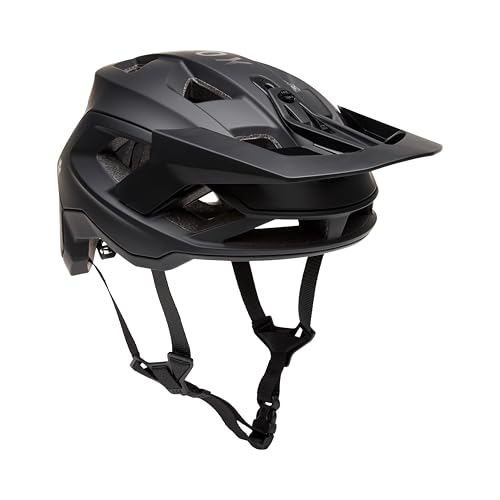
Fox Racing Unisex Speedframe Mountain Bike Helmet
Fox Racing Unisex Speedframe Mountain Bike Helmet, Black Solid, Large | Lightweight, Mips-equipped trail helmet with adjustable fit and visor for all-mountain riding
Best for: All-mountain trail riding
This helmet suits riders who spend long days on mixed terrain and want a single helmet that handles climbs, fast descents and the occasional crash without feeling heavy. It is a strong all-round choice for riders who like a visor for sun and debris.
Key specs
- Size: Large
- Color: Black Solid
- Mips-equipped for rotational impact reduction
- Adjustable fit system and visor
Pros
- Lightweight for an all-mountain helmet
- MIPS adds a rotational protection layer
- Visor helps block sun and trail debris
Cons
- Single color option in this listing
- Visor can be in the way when looking up on steep climbs
Bottom line: A good first pick for riders who want an all-mountain helmet with a visor and MIPS protection without moving into full-face territory.
View on AmazonGiro Fixture MIPS Bike Helmet
Giro Fixture MIPS Bike Helmet – Matte Black/Grey – Universal Adult (54-61 cm)
Best for: All-day comfort
This model is aimed at riders who ride for hours and care most about a helmet that stays comfortable on long efforts. It fits adults in the universal size range and suits commuters and trail riders alike.
Key specs
- Universal adult size: 54–61 cm
- Color: Matte Black/Grey
- MIPS for rotational protection
Pros
- Universal sizing covers a wide head range
- MIPS adds rotational protection
- Matte finish looks understated on the trail
Cons
- Fit can vary with head shape, so trying a size is important
- Limited coverage compared with full-face options
Bottom line: Best for riders who want a comfortable, versatile helmet for long rides and mixed use.
View on AmazonGiro Fixture MIPS II Bike Helmet
Giro Fixture MIPS II Bike Helmet – Matte Dark Sage – Universal Adult (54-61 cm)
Best for: A lower-profile look
This variant appeals to riders who want the same universal-fit concept in a darker, more subdued finish. It works well for riders who prefer a clean appearance without giving up MIPS.
Key specs
- Universal adult size: 54–61 cm
- Color: Matte Dark Sage
- MIPS II system
Pros
- Subdued color suits a wide range of kits
- Universal sizing for many adult heads
- MIPS II offers a rotational layer
Cons
- Fit and ventilation depend on individual head shape
- Not designed for downhill-level impacts
Bottom line: A good choice for riders who want a MIPS helmet with a quieter color palette for everyday trail use.
View on AmazonBATFOX Bike Helmet
BATFOX Bike Helmet, Mountain Bike Helmet for Men Women Adults Youth (Black, L(58-61CM))
Best for: Budget-conscious riders and families
This helmet is aimed at riders who want an affordable option for casual trail riding, commuting or family rides. It covers men, women, adults and youth in one listing, which makes it practical for households with mixed sizes.
Key specs
- Size: L (58–61 cm)
- Color: Black
- Designed for men, women, adults and youth
Pros
- Budget-friendly entry point for casual riding
- Covers a broad range of ages and head sizes
- Simple, low-profile design
Cons
- Protection specifications are less detailed than premium helmets
- Fewer features such as advanced ventilation or rotational systems
Bottom line: A sensible choice for casual riders and families who want a basic helmet for light trail or street use.
View on AmazonSMITH Engage MTB Cycling Helmet
SMITH Engage MTB Cycling Helmet – Matte Black, Medium | Adult Mountain Bike Helmet with MIPS Technology + Koroyd Coverage. Lightweight Protection for Men & Women. Adjustable Visor.
Best for: Protection with airflow
This helmet suits riders who want MIPS and extra coverage from Koroyd material while still keeping airflow in mind. It is a good match for riders who ride technical terrain in warm weather.
Key specs
- Size: Medium
- Color: Matte Black
- MIPS technology with Koroyd coverage
- Adjustable visor
Pros
- Koroyd coverage is designed to help manage impact energy while keeping ventilation
- MIPS adds a rotational protection layer
- Adjustable visor for sun and debris
Cons
- Typically priced higher than basic models, so it suits riders who prioritize protection
- Fit should be checked carefully, as Koroyd-style helmets can feel different on the head
Bottom line: Best for riders who want a balance of MIPS protection, Koroyd coverage and airflow for technical trail riding.
View on AmazonBuying Guide
Certification and Standards
Look for a helmet labeled as meeting the US CPSC bicycle helmet standard (16 CFR 1203) or the European EN 1078 standard. Some mountain bike helmets also meet ASTM F1952 for downhill use. Certification is the baseline; it does not measure everything you might want, but it confirms a minimum level of impact performance.
Good picks for this: Fox Racing Unisex Speedframe Mountain Bike Helmet, SMITH Engage MTB Cycling Helmet
Fit and Sizing
Measure your head about one inch above your eyebrows and around the widest part. Helmet sizes are typically tied to these measurements. A helmet should sit level on your head, with the front about one finger width above your eyebrows, and the side straps should form a V under your ears. The retention system should hold the helmet snugly without pressure points.
Good picks for this: Giro Fixture MIPS Bike Helmet, Giro Fixture MIPS II Bike Helmet
MIPS and Rotational Protection
MIPS is a low-friction liner that allows the head to rotate slightly during an angled impact, which can reduce rotational forces. Many trail helmets now offer some version of this technology. It is a useful feature, but it is one part of a helmet’s overall design rather than a guarantee of safety.
Good picks for this: Fox Racing Unisex Speedframe Mountain Bike Helmet, SMITH Engage MTB Cycling Helmet
Ventilation and Weight
Trail riding often produces heavy sweat, so vent count and airflow matter. Weight also affects neck fatigue on long rides. Helmets built with more vents tend to feel cooler, but very open designs may offer less coverage. Consider your typical ride length and climate.
Good picks for this: SMITH Engage MTB Cycling Helmet, Giro Fixture MIPS Bike Helmet
Coverage and Riding Style
Cross-country and light trail riders usually choose an open-face or trail helmet. Enduro and downhill riders often need more coverage, which points toward full-face designs. Match coverage to the terrain you ride most, not the terrain you hope to ride someday.
Good picks for this: Fox Racing Unisex Speedframe Mountain Bike Helmet, BATFOX Bike Helmet
Visor and Eye Protection
A visor shades your eyes from sun and keeps some branches and debris off your face. Adjustable visors let you change the angle for climbing and descending. Consider whether you want to pair the helmet with goggles, since some visors can interfere with goggle fit.
Good picks for this: Fox Racing Unisex Speedframe Mountain Bike Helmet, SMITH Engage MTB Cycling Helmet
Care and Replacement
Replace any helmet after a significant impact, even if no damage is visible. Manufacturers generally recommend replacing helmets every few years because UV exposure, sweat and temperature changes can degrade materials. Clean the pads with mild soap and avoid harsh solvents on the shell.
Good picks for this: Giro Fixture MIPS II Bike Helmet, BATFOX Bike Helmet
FAQ
Is a specialized mountain bike helmet the same as a trail helmet?
Not always. “Mountain bike helmet” is a broad category that includes trail, enduro and downhill models. Check the coverage, certification and intended use on the listing to know which type you are buying.
How do I know if my helmet fits correctly?
The helmet should sit level, with the front just above your eyebrows and no gaps at the sides. Straps should form a V under your ears, and the buckle should sit snugly under your chin with room for one or two fingers.
Does MIPS make a helmet safer?
MIPS is designed to reduce rotational forces during angled impacts. It is a useful feature, but it does not replace certification or proper fit. Choose a helmet that meets a recognized standard and fits you well.
When should I replace my mountain bike helmet?
Replace it after any significant crash or impact, even if the damage is not visible. Many manufacturers also suggest replacing helmets every few years due to material aging from sun and sweat.
Can I use a road helmet for mountain biking?
A road helmet can work for light trail riding, but mountain bike helmets usually offer more coverage at the back and sides, plus visors for sun and debris. Riders who spend time on rough terrain often prefer a dedicated trail design.
Are full-face helmets necessary for all mountain biking?
No. Full-face helmets are most common among downhill and enduro riders who face higher-speed impacts. Cross-country and casual trail riders often choose lighter open-face or trail helmets. Consider your terrain and speed before deciding.
Conclusion
The best specialized mountain bike helmet for you depends on how and where you ride. The Fox Racing Speedframe suits all-mountain riders who want a visor and MIPS. The Giro Fixture models work well for all-day comfort and a clean look. The BATFOX Bike Helmet is a practical budget option for casual or family riding. The SMITH Engage MTB Cycling Helmet is worth a look for riders who want MIPS and Koroyd coverage with airflow in mind. Always check certification, try the helmet on for fit, and replace it after any significant impact.
Sources
- Federal bicycle helmet safety standard and consumer safety guidance (cpsc.gov)
- Motorcycle and bicycle helmet safety research and fit information (nhtsa.gov)
- Bicycle injury prevention and helmet use recommendations (cdc.gov)
Related reading
- Youth Full Face Mountain Bike Helmet: How to Choose and Fit One Safely
- Women's Mountain Bike Helmet: 7 Best Picks for Trail Riders (2026)
- TLD Mountain Bike Helmet: How to Choose, Fit and Use One Safely
- Red Bull Helmet Mountain Bike Picks: 5 Best Options for Trail Riding (2026)
- Lightweight Mountain Bike Helmet: 7 Best Picks for Trail Riders (2026)

About Audrey Brooks
Audrey writes about bike helmets & cycling safety. Each guide starts with research into how products are built and what owners report after months of use, and is revised when better options appear.
About the author
Audrey Brooks writes reviews and buying guides for Bike Helmet Snow.